Pool Access Safety in Las Vegas Homes
Homes with swimming pools offer great enjoyment, especially in Las Vegas — but they also come with serious safety responsibilities. One way to reduce the risk of unnoticed pool access is through door and window safety alarms.
During Las Vegas home inspections, missing or non-functioning pool access alarms are a safety concern, particularly in homes with young children. An alarm does not physically stop someone from reaching the water, but it can draw attention to an opening that might otherwise go unnoticed.
Why Pool Access Safety Alarms Are So Important
Drowning accidents can happen quickly and silently. Doors or windows that lead directly to a swimming pool create a serious risk when children can access them unsupervised, barriers are incomplete or compromised, or supervision is momentarily interrupted.
Safety alarms provide an additional layer of protection, alerting adults when a door or window leading to the pool is opened. They supplement physical barriers like fencing and self-closing, self-latching gates. They do not replace those barriers or attentive adult supervision. A working alarm still requires an adult to hear it and respond.
What Are Pool Door and Window Safety Alarms?
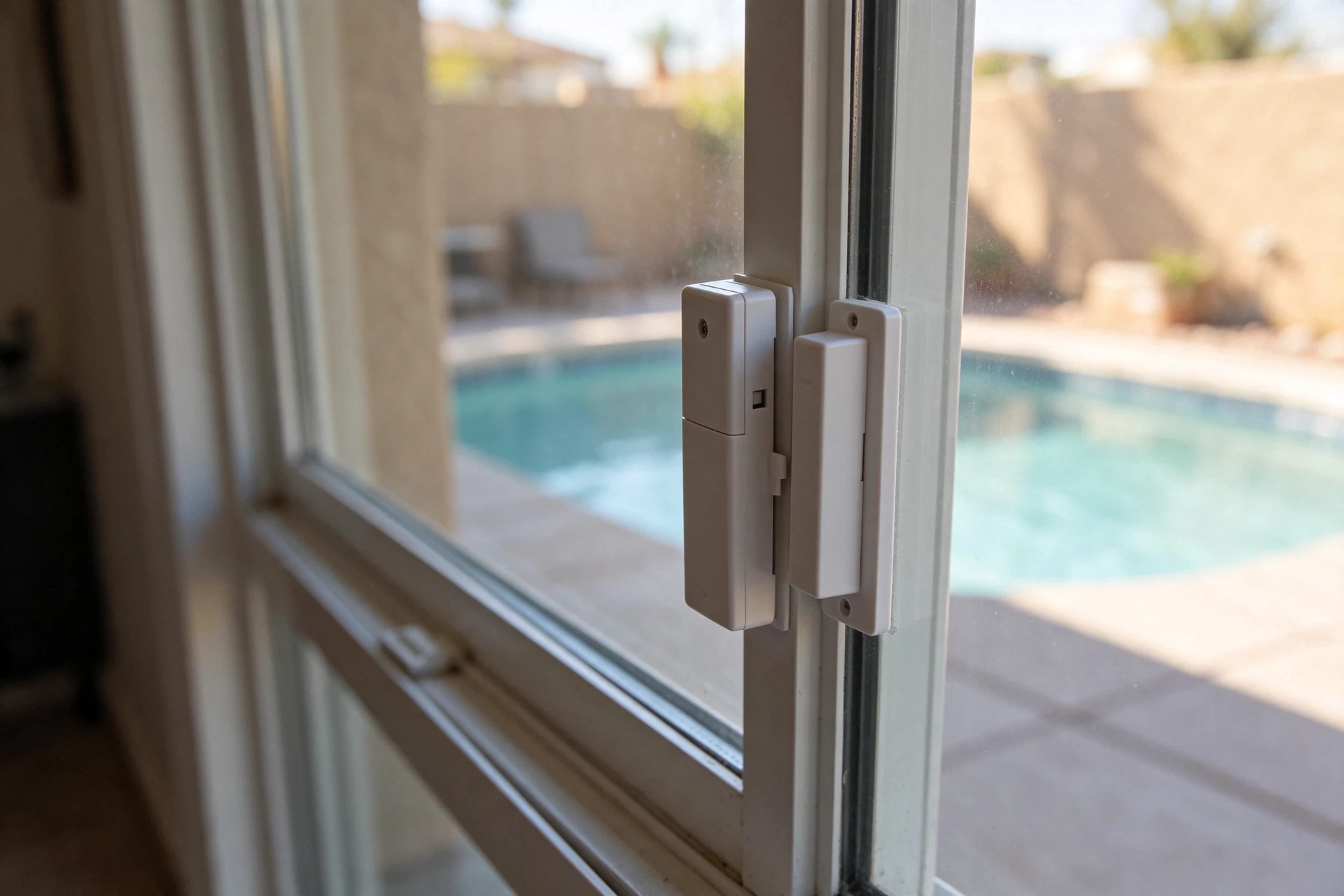
Pool safety alarms are devices installed on doors and windows that provide direct access from the home to the pool area. When the opening is operated, the alarm emits a loud audible alert, draws immediate attention to the opening, and helps prevent unnoticed pool access.
Most door and window alarms detect the opening of the door or window. Many models include battery-powered operation, temporary bypass features for adults, and automatic re-arming. Features differ by product, so check the manufacturer's instructions rather than assuming every alarm works the same way. A bypass should not leave an access point unprotected indefinitely.
Where Are Pool Safety Alarms Required?
In many Las Vegas and Clark County homes, pool safety requirements are addressed through multiple layers of protection. These may include pool fencing, self-closing and self-latching gates, door and window alarms, and pool covers or other approved safety devices.
Door and window alarms may be required when a wall of the home serves as part of the pool barrier and openings provide direct access to the pool area. The applicable requirements depend on the local jurisdiction, installation date, permit history, and approved barrier arrangement. Do not assume the same rule applies to every existing pool throughout the valley.
Ask the local building department about requirements for your particular property and any proposed changes. HOA rules may add separate restrictions, but HOA approval is not a substitute for building-department approval. A home inspection identifies observed safety concerns; it is not a code-compliance certification.
Common Issues Found During Home Inspections
During Las Vegas home inspections, inspectors may find missing alarms on pool access doors, alarms that do not sound when tested, disabled or bypassed features, dead or missing batteries, and improper installation. Any of these conditions reduces the effectiveness of the safety system and should be treated as a safety concern.
A device mounted near a door is not proof that it works. The alarm must respond to the intended opening, and the household needs to understand its operation. Keep access paths clear, make operating instructions available, and tell the inspector about any known disabled devices. Do not conceal a problem by temporarily changing the alarm settings before the inspection.
Choosing and Installing Pool Safety Alarms
Door and window alarms are available at home improvement stores and online. Many basic models are relatively inexpensive, but suitability matters more than the lowest purchase price. Select a device intended for the application and confirm any required specifications with the responsible building department or a qualified installer.
Some battery-operated models are designed for homeowner installation with minimal tools. Follow the manufacturer's installation instructions, including placement, testing, battery replacement, and re-arming behavior. If you are unsure about compatibility, placement, or functionality, a professional installer can assist. Electrical work or changes to doors, windows, and barriers should be handled by an appropriately qualified professional rather than improvised.
How Pool Safety Alarms Are Addressed in a Home Inspection
During an Absolute Home Inspection, accessible doors and windows leading to pool areas can be identified, checked for the presence of alarms, and tested where safe and within the agreed inspection scope. Missing or inoperable alarms are documented so buyers and homeowners understand the observed concern and potential upgrade needs.
Arrange access to the relevant openings and keep children and pets away from the pool during the inspection. Alarm testing can be loud, so let occupants know in advance. If an opening cannot be safely accessed or a device cannot be operated, that limitation matters when interpreting the report.
A basic access-safety observation should not be confused with a dedicated pool and spa inspection, which is a paid add-on. Confirm the requested scope before the appointment. Every inspection at Absolute Home Inspections is overseen by a Certified Master Inspector; no inspection can guarantee that every defect or unsafe condition will be found.
Pool Door & Window Safety Alarm FAQs (Las Vegas)
Are door and window alarms required for pools in Las Vegas? Requirements can vary, particularly with the jurisdiction, installation date, and approved barrier design. Ask the local building department about your home's arrangement rather than relying on a general rule.
Do safety alarms replace pool fencing? No. Alarms are designed to supplement, not replace, physical barriers like fencing and gates. They also do not replace supervision.
How loud should pool safety alarms be? The alert needs to reach the adults responsible for responding. Follow the device instructions and applicable local specifications; an alarm that cannot be heard from occupied areas offers limited warning.
Can alarms be temporarily disabled? Many alarms have temporary adult bypass features. Check how the specific model re-arms, and do not leave it disabled after routine use.
Door and window safety alarms provide an important layer of protection for homes with swimming pools. When properly selected, installed, and maintained, they help reduce unnoticed pool access. For families, buyers, and homeowners alike, keeping these devices functional is a practical part of maintaining pool safety.
This article is homeowner education, not a diagnosis of your property. Inspection findings, installation requirements, and repair recommendations depend on the home and the conditions at the time of inspection.
Call or text Absolute Home Inspections