Why Photoelectric Safety Eyes Matter
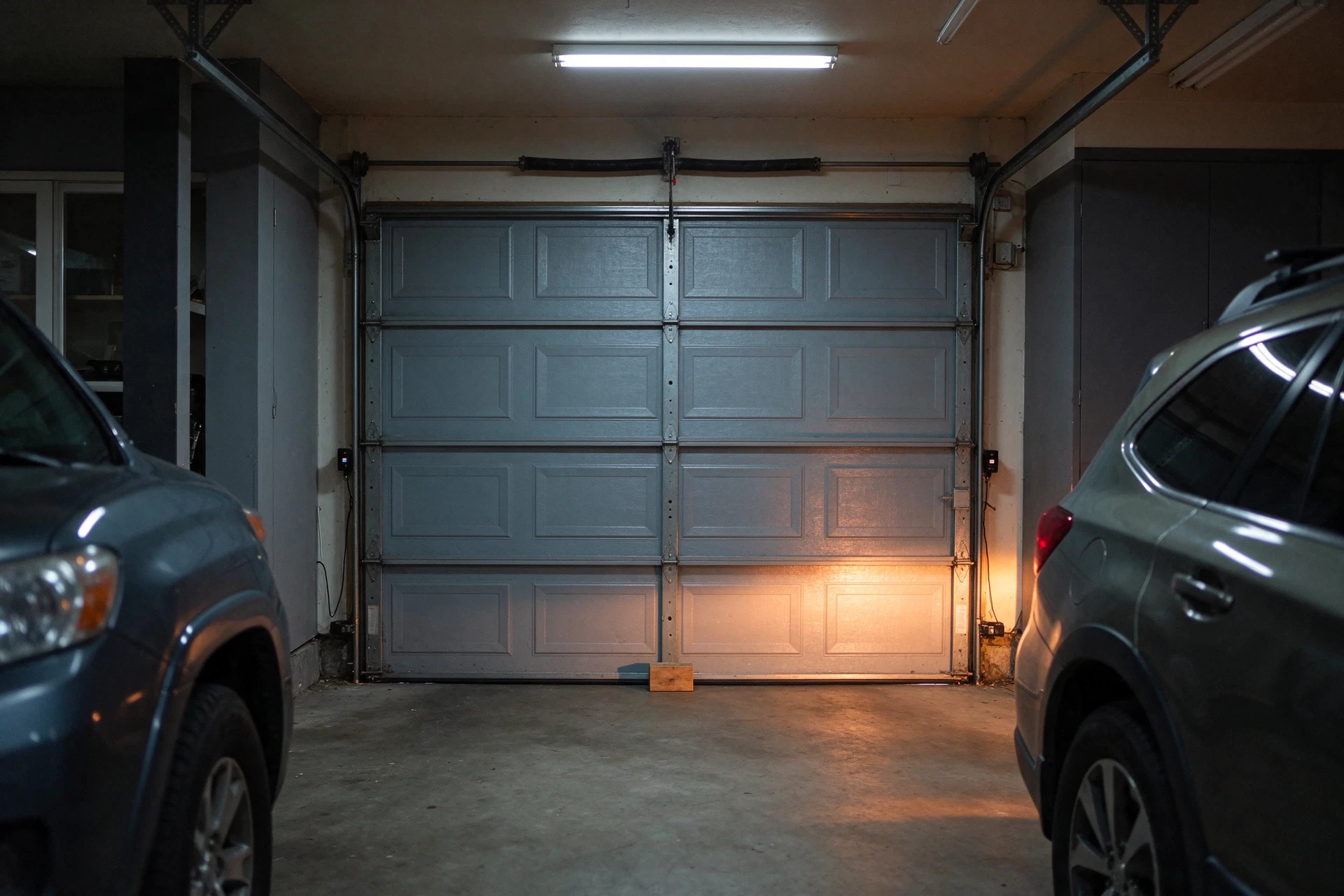
Garage doors are one of the heaviest moving components in a home, which is why modern garage door systems include photoelectric safety eyes. During Las Vegas home inspections, missing, misaligned, or disabled safety eyes are common safety deficiencies. Understanding how these sensors work—and why they matter—can help homeowners keep their families safe and understand inspection findings.
These sensors are designed to prevent the garage door from closing on children, pets, vehicles, bikes, tools, or other stored items that interrupt the beam. Because garage doors are heavy and powerful, a closing door without functioning safety protection can cause serious injury or property damage. Sensors reduce risk, but they do not replace keeping people clear of a moving door.
What Are Photoelectric Safety Eyes?
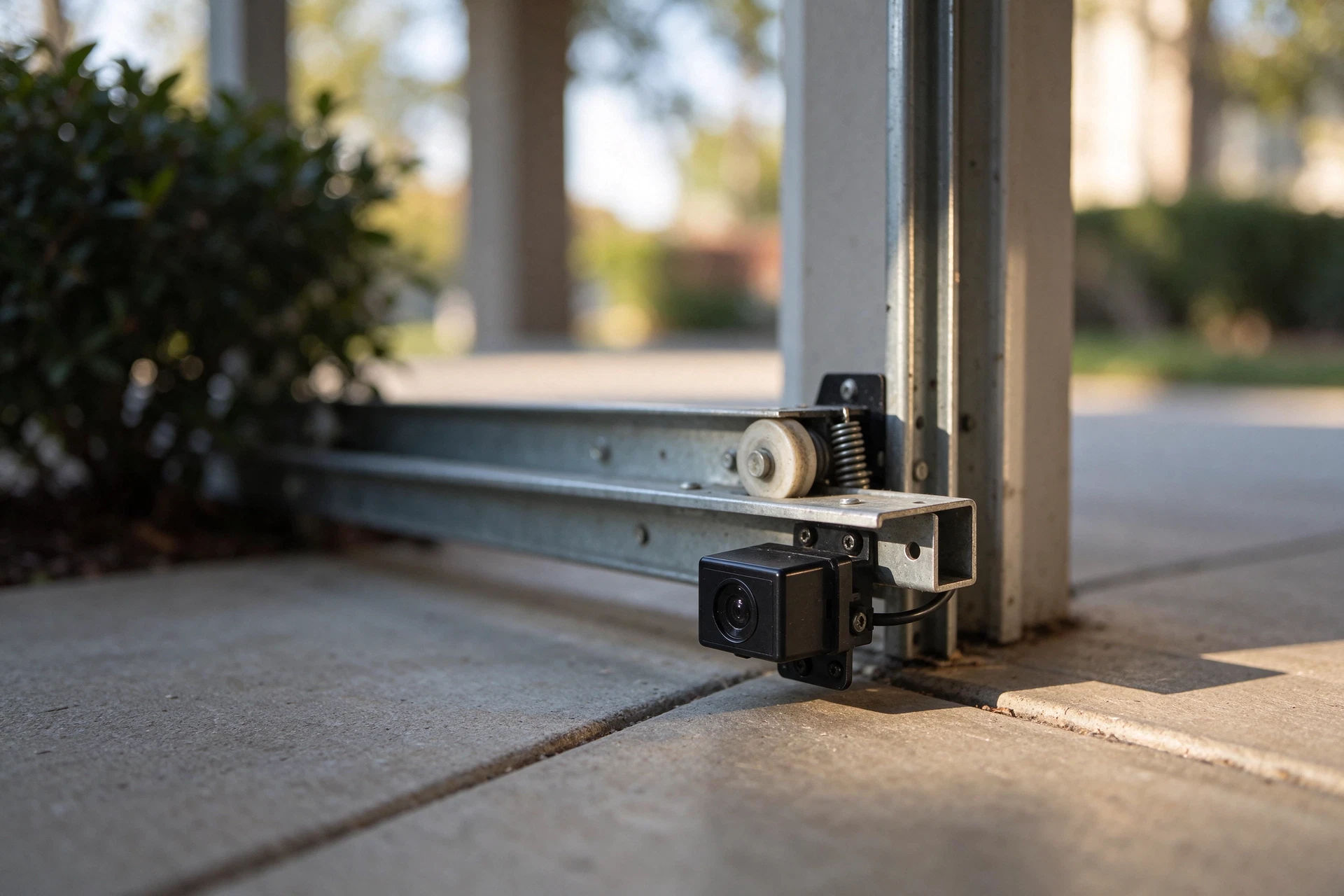
Photoelectric safety eyes are small sensors installed near the bottom of a garage door opening, with one sensor on each side. They send an invisible beam across the opening. If something breaks that beam while the door is closing, a properly operating system should stop and reverse rather than continue downward.
The original article described a typical mounting height of 4–6 inches above the floor. The opener manufacturer's instructions control the installation; mounting the sensors too high can allow a small obstruction to remain below the beam. The term photoelectric describes light-based sensing. It is not a sound-based, or sonic, detection system.
Are Photoelectric Safety Eyes Required?
The original article connected these devices with the safety requirements introduced in 1993. More precisely, federal requirements for residential garage-door openers manufactured on or after January 1, 1993 added entrapment protection. The Consumer Product Safety Commission describes external protection such as an electric eye or sensing edge, and a constant-contact control alternative. It is therefore too broad to say every garage door must use photoelectric eyes specifically.
The opener's manufacturing date, approved safety configuration, installation instructions, and applicable local requirements matter. An older installation should not simply be assumed safe because it predates a requirement. A qualified garage-door professional can evaluate the equipment and recommend appropriate repair or replacement. A home inspection is not a code-compliance certification.
Common Problems Found During Home Inspections
Inspectors may observe missing safety eyes, sensors mounted too high, misaligned sensors, dirty or obstructed lenses, intentionally disabled protection, or damaged wiring. These conditions can prevent the system from functioning as intended and are documented as safety concerns when observed.
In a garage used for storage, a box, bicycle, or tool may block the beam. A bumped bracket can change alignment even when both sensors remain attached. Clearing stored items away from the sensor locations helps the inspector see the installation and allows the garage-door technician to investigate a problem without unnecessary obstructions.
How to Recognize a Sensor Problem Safely
Most photoelectric safety eyes have indicator lights. A solid light may indicate proper alignment, while a blinking or absent light may indicate misalignment, obstruction, or a malfunction. Indicator meanings differ by model, so consult the manufacturer's manual rather than treating one light pattern as a universal rule. An illuminated sensor is not proof that every safety function works.
Follow the manufacturer's recommended testing procedure and keep all people and pets clear of the door's path. Never use a foot, hand, or another body part to test a moving garage door. If the door behaves unpredictably or fails a prescribed safety test, stop using the opener and arrange professional evaluation. Do not bypass the sensors to make the door close.
Repair and Homeowner Maintenance Boundaries
Common remedies can include correcting alignment, cleaning lenses, addressing loose mounting components, or repairing wiring. The original article noted that some sensor issues are straightforward to resolve. Actual cost depends on the equipment and the cause, so obtain an assessment rather than assuming an inexpensive adjustment will solve every failure.
Homeowners can keep stored items away from the beam and follow the manual's routine cleaning guidance while the door is stationary and safely secured. Damaged wiring, a nonresponsive sensor, or repeated malfunction calls for a qualified garage-door technician. Do not adjust springs, cables, or opener force settings as a workaround for failed safety protection.
How Safety Eyes Are Addressed in a Home Inspection
During an Absolute Home Inspections evaluation, inspectors check the presence, visible mounting, alignment, and operation of accessible garage-door safety features when conditions permit safe testing. Deficiencies are documented in the report, including a failed response or conditions that limit evaluation.
A home inspection does not pass or fail a property. Nonfunctioning safety eyes are clearly noted as a safety concern so a buyer or homeowner can seek qualified repair. The evaluation reflects accessible conditions at the time of inspection; it cannot guarantee future performance or identify every concealed defect. Keep the area clear and provide the opener manual if it is available.
Safety Eyes and Auto-Reverse: Common Questions
Can safety eyes be disabled? Disabling them removes a critical safety feature and is unsafe. Do not relocate both sensors away from the opening or use another workaround that prevents them from detecting an obstruction.
Do safety eyes replace the auto-reverse feature? No. Photoelectric protection detects an interrupted beam without contact, while the door's contact-reversing protection responds differently. One successful test does not establish that the other system works. Follow the manufacturer's instructions for each feature and have a technician address a failure.
Photoelectric safety eyes are a small but essential component of many modern garage-door systems. When properly installed and maintained, they help protect people, pets, and property. Addressing missing or malfunctioning protection promptly is a practical way to improve safety in a Las Vegas home.
This article is homeowner education, not a diagnosis of your property. Inspection findings, installation requirements, and repair recommendations depend on the home and the conditions at the time of inspection.
Call or text Absolute Home Inspections