What It Is, Why It Happens, and What It Costs to Fix
Window seal failure is a common finding during Las Vegas home inspections, including in homes built from the mid-1990s through the early 2010s. While it may start as a cosmetic issue, failed window seals can reduce comfort and signal aging building components. Depending on the glazing and extent of failure, insulating performance can also decline.
This article explains how window seal failure occurs, why desert conditions can contribute to it, what inspectors look for, and the differences between glass-unit repair and full window replacement. A cloudy pane does not automatically mean the entire window assembly needs to be replaced.
What Is Window Seal Failure?
Many homes in Las Vegas use double-pane, or insulated glass, windows. These windows rely on a sealed airspace between two panes of glass, often filled with argon gas, to improve insulation. The glass assembly is called an insulated glass unit, or IGU.
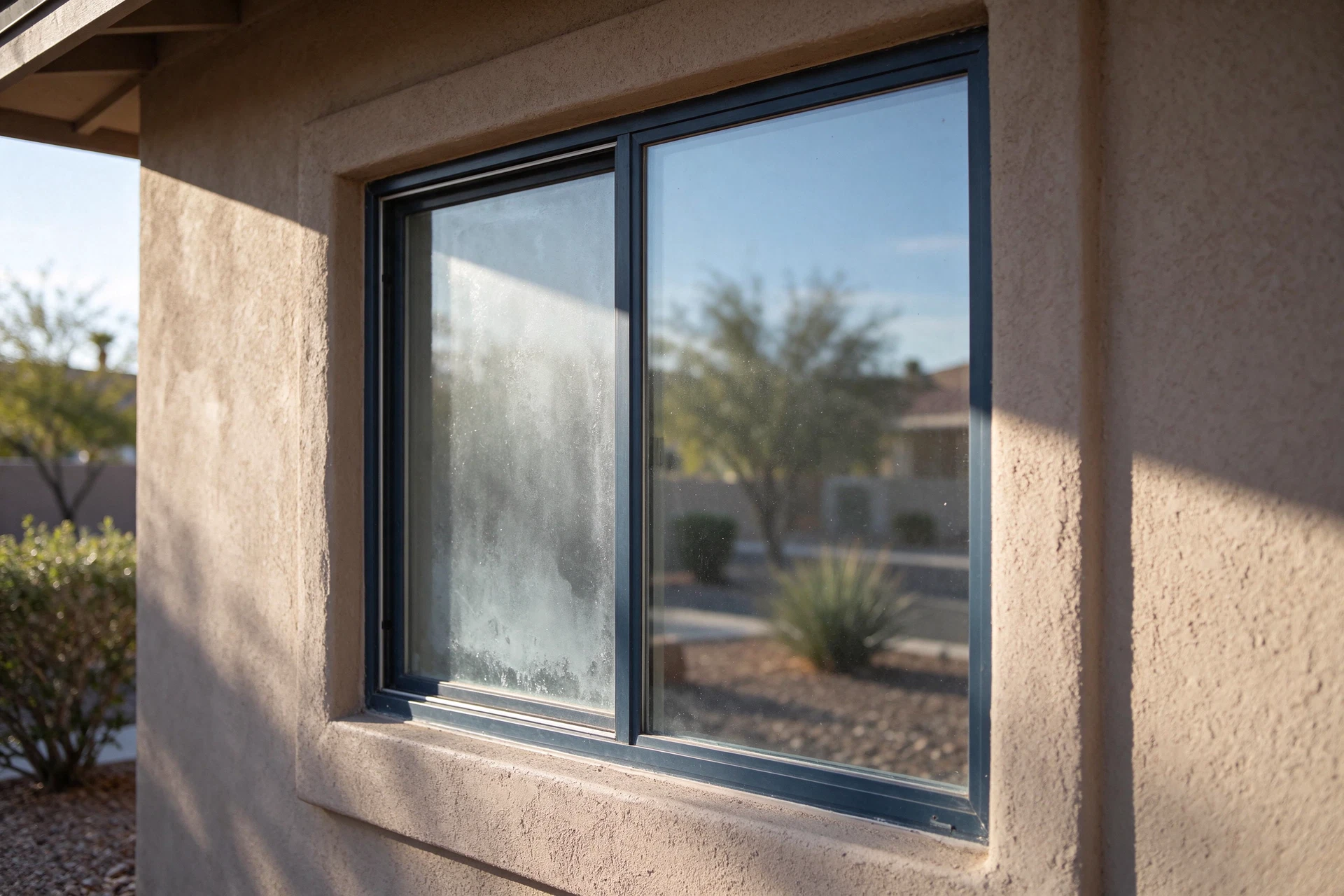
Window seal failure occurs when this perimeter seal breaks, allowing moisture into that space and potentially allowing insulating gas to escape. Haze, dust, or mineral deposits may then become trapped between the panes. Cleaning the room-side or outside surface will not remove deposits inside the sealed unit.
Exterior caulking is different from the seal that holds the glass unit together. Adding caulk around the window does not restore a failed internal seal. Restoring a sealed insulating assembly generally means replacing the IGU rather than trying to reseal it in place.
Common Signs Found During Home Inspections
During a professional home inspection, window seal failure is typically identified by visible changes between the glass panes. The location of the moisture matters: condensation on an accessible glass surface is not, by itself, evidence of an internal seal failure.
Seal failure may be more noticeable in early mornings or during temperature swings when condensation becomes visible. A pane that looks clear during one visit can look cloudy at another time. An inspection documents visible conditions; it cannot establish that every clear-looking insulated glass unit still has an intact seal.
- Fogging or haze between glass panes.
- Water droplets or streaking inside the glass unit.
- A cloudy or milky appearance that will not clean off the accessible surfaces.
- Etching or mineral deposits trapped between panes.
Why Las Vegas Conditions Can Stress Window Seals
Extreme summer heat and UV exposure can age seal materials over time. Hot days and cooler nights also cause expansion and contraction of the window assembly. These repeated changes can place stress on the edge seals, especially where the glazing is older or already deteriorating.
Many production homes have builder-grade windows selected with cost in mind. The original article described seal failures appearing after roughly 10–15 years in desert conditions. That is an observation, not a fixed service life: product quality, installation, exposure, maintenance, and individual manufacturing defects can make a substantial difference.
Wind and fine desert dust are additional exposure considerations, particularly around deteriorated components. When several original windows show similar haze, it is worth evaluating the remaining glazing and planning a repair budget rather than assuming the first affected pane is an isolated problem.
Why Failed Window Seals Matter Beyond Appearance
Failed seals can reduce insulating performance, but the effect on summer power bills depends on the window design, the amount of affected glazing, and other conditions in the home. Hot spots near windows and uneven cooling may have several causes; seal failure is not proof that it alone is responsible for higher HVAC costs.
Widespread glazing deterioration may contribute to cooling loads and longer equipment operation. It does not, by itself, establish that an HVAC system is oversized or predict its remaining lifespan. Window observations and HVAC findings should be considered together rather than treating a fogged pane as an equipment diagnosis.
During a sale, failed seals are often flagged in home inspection reports and may become a repair request or negotiation item. Buyers sometimes interpret the finding as meaning all the windows are bad. Identifying the affected locations and obtaining a glazing assessment helps separate a replaceable glass unit from a damaged frame or a larger window problem.
Repair vs. Replacement: What Are Your Options?
Replacing the insulated glass unit keeps the existing window frame when that frame remains suitable. It is often faster and less expensive than replacing the complete window. A glass contractor should confirm the dimensions and the required glass specifications, including tint and low-E coating, before preparing a quote.
Full window replacement may be appropriate for older or damaged frames or when broader improvements are planned. It costs more upfront and involves more than simply changing the glass. The condition of the frame and installation should guide that decision, not the appearance of fogging alone.
For historical context, the original February 2026 article listed Las Vegas estimates of $250–$600 per window for IGU replacement and $800–$1,500 or more per window installed for complete replacement. These were illustrative repair estimates, not Absolute Home Inspections service prices or verified current contractor quotes. Size, glazing specifications, access, and installation work can change the cost; obtain a current written estimate for the actual windows.
Defogging services may improve appearance without restoring the original insulating performance. Drilling holes to vent moisture is not equivalent to replacing a sealed glass unit, and exterior caulking does not repair the internal seal. Have a qualified glazing professional evaluate the assembly rather than attempting to drill or dismantle it yourself.
Inspection Tips for Buyers and Homeowners
If multiple windows show seal failure, budget planning is recommended. Repairs can often be phased rather than done all at once. Keep the affected window locations with your inspection report so a glass contractor can assess those units and check whether other assemblies need attention.
Before the inspection, make windows reasonably accessible and mention any fogging that appears only at certain times. Photographs of intermittent haze can help explain your concern. Inspectors visually evaluate accessible windows but do not dismantle glass units or certify that every hidden seal is intact.
A professional home inspection helps identify visible affected windows, understand repair priorities, and make informed repair or negotiation decisions. For questions about an inspection in the Las Vegas area, call or text Absolute Home Inspections at 702-752-0061 or email [email protected].
Frequently Asked Questions
Is window seal failure a safety issue? Seal failure alone is generally not a structural or immediate safety hazard. Broken glass, loose components, and operating problems are separate findings that may require more urgent attention.
Can window seal failure cause mold? Moisture trapped between panes is different from water entering the home. Do not assume visible staining or damp materials around a window are simply an internal glazing issue; those conditions need separate evaluation.
Will homeowners insurance cover failed window seals? Coverage depends on the policy and circumstances. Ask your insurer directly; a home inspection does not determine coverage or provide insurance advice.
How long do windows last in Las Vegas? There is no single lifespan for all windows. The original article discussed builder-grade seal failures around 10–15 years, but some units fail earlier and others last longer. Assess the condition of the actual glazing rather than relying only on the home's age.
Will a home inspector test every window? Inspectors visually evaluate windows within the inspection scope and available access. They do not dismantle insulated glass units, and seal failure may not be visible under the conditions present that day.
This article is homeowner education, not a diagnosis of your property. Inspection findings, installation requirements, and repair recommendations depend on the home and the conditions at the time of inspection.
Call or text Absolute Home Inspections