A Home Inspection Perspective for Las Vegas Homeowners
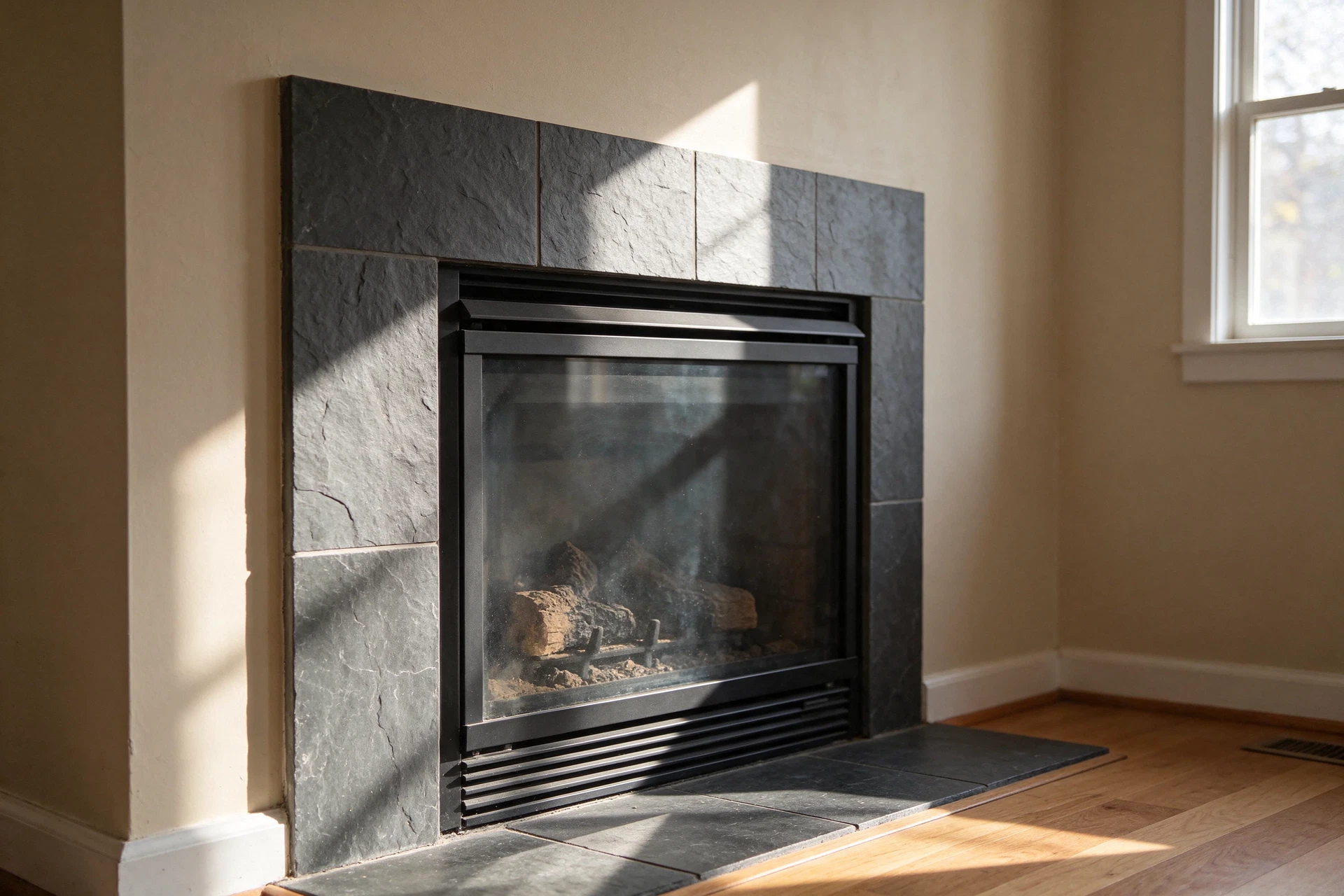
If you’ve noticed your fireplace glass looking cloudy, blackened, or permanently stained, you’re not alone. During Las Vegas home inspections, fireplace glass discoloration is a common finding, especially in gas fireplaces that are used seasonally. Understanding why this happens can help homeowners maintain both safety and appearance.
The first useful distinction is between a light film and heavy black soot. They do not necessarily have the same cause. Note whether the haze appears only when the fireplace starts, whether it clears as the glass warms, and whether deposits return soon after cleaning. Those observations help a qualified fireplace technician decide what needs attention.
Soot Buildup from Improper Combustion
One of the common causes discussed in the original article is soot accumulation. Possible contributors include misaligned burners, incorrectly positioned logs, an unsuitable air-to-gas mixture, or partially clogged burners. Flames contacting logs in a way the appliance was not designed for can leave carbon deposits on the glass.
Excess soot may indicate improper combustion, which can reduce efficiency and create safety concerns. Flame color alone is not a reliable diagnosis: many decorative gas fireplaces are designed to show yellow flames. The appliance’s specified flame pattern, soot deposits, venting, and maintenance history matter together. Do not adjust burners, gas controls, or log placement by guesswork. Have a qualified technician evaluate heavy or recurring soot before further use.
White Haze, Dust, and Combustion Byproducts
Even a properly functioning gas fireplace produces water vapor and carbon dioxide. Condensation and residue associated with combustion can leave a light white or gray film over time. In many cases, this film can be removed during routine maintenance with an appropriate fireplace-glass cleaner.
The original article also discussed Las Vegas hard water and mineral-rich dust. Dust can settle on exposed surfaces, and repeated heating may make deposits harder to remove. However, a gas fireplace does not use household water, so local hard water alone does not establish the cause of an interior haze. Combustion residue, cleaning products, and the appliance’s operating history should also be considered.
Cloudiness that remains after suitable cleaning may reflect stubborn residue or permanent surface damage. It is not possible to confirm glass etching from appearance alone. Avoid repeated aggressive scrubbing or stronger chemicals in an attempt to force the glass clear.
Damaged Glass or a Compromised Seal
Sealed direct-vent gas fireplaces rely on the correct glass panel, gasket, and fastening arrangement. Not every fireplace uses this design, so the model’s instructions are important. A damaged gasket, loose panel, or improperly secured glass assembly deserves professional evaluation rather than a cosmetic cleaning treatment.
Brief condensation during startup does not by itself prove that a seal has failed. Persistent fogging, a visibly damaged seal, or a loose panel should be documented and assessed in context. Do not operate a sealed appliance with its glass removed or improperly secured. Cracked or chipped fireplace glass also requires service and the correct manufacturer-approved replacement.
Why This Matters During a Home Inspection
Fireplace glass condition helps an inspector identify visible maintenance concerns and possible reasons to recommend specialist service. Heavy soot may indicate the need for professional servicing. Persistent haze may warrant further evaluation for residue, aging components, or glass damage.
During a home inspection, the fireplace is visually inspected and operated when safe, accessible, and within the agreed inspection scope. Visible glass condition, accessible panel attachment, and other observable concerns can be reported. A home inspection is not a burner adjustment, dismantling service, combustion analysis, or guarantee that every hidden venting defect will be found.
Before an inspection, make the fireplace and normal controls accessible, locate the owner’s manual, and gather any service records. Tell the inspector about prior soot buildup, difficult operation, or repairs. Do not light an appliance you believe is unsafe merely to demonstrate it.
Can Fireplace Glass Be Cleaned?
Usually, yes, if the issue is removable film and it is addressed before deposits become difficult to remove. Clean only when the fireplace and glass are completely cool, use a fireplace-specific cleaner approved for the appliance, and follow the manufacturer’s instructions. Avoid ammonia-based household products, abrasive pads, and improvised scraping methods.
Some units allow glass removal for maintenance, while others require professional handling. Follow the exact model instructions or consult a professional; do not use another fireplace’s procedure as a substitute. Cleaning also does not correct the underlying cause of black soot.
If the glass has permanent surface damage, replacement may be required. The original article listed a glass-only estimate of $150–$400 and noted that a complete panel assembly could cost more. That historical estimate is not a current quote. The required glass type, model, panel assembly, labor, and availability affect the actual cost, so obtain a model-specific service estimate.
How to Prevent Heavy Buildup
The original maintenance plan combined annual service, professional burner and log-placement checks, cleaning during the heating season, and inspection during real estate transactions. Follow the manufacturer’s service schedule and have the appliance checked before seasonal use when its condition or maintenance history is uncertain.
Regular servicing can reduce soot and keep the glass easier to maintain, but it does not make the appliance maintenance-free. If black deposits return quickly after cleaning, arrange service rather than repeatedly wiping away the evidence. Keep the manual and service records available for the next owner as well as for your own maintenance planning.
Fireplace Glass Questions from Las Vegas Homeowners
Why is my fireplace glass turning black? Black buildup is commonly soot associated with combustion problems or incorrectly positioned logs. A technician should determine the cause; cleaning the glass alone is not a repair.
Why does my fireplace glass look cloudy even after cleaning? Residue that has become difficult to remove or permanent surface damage may be involved. The appearance alone does not identify the cause or prove that replacement is necessary.
Is cloudy fireplace glass a safety issue? A light film may be a maintenance or appearance issue, but glass clarity cannot establish that an appliance is safe. Heavy soot, cracked glass, or a loose sealed panel warrants further evaluation.
Should fireplace glass be removed for cleaning? Only as permitted by the appliance’s instructions and when it can be handled safely. If the procedure or reassembly is unclear, use a qualified professional.
Do home inspectors check fireplaces in Las Vegas? A home inspection includes evaluation of accessible fireplace components within its scope, with operation when conditions permit. Specialist servicing may still be recommended. For questions about a fireplace finding in an Absolute Home Inspections report, call or text 702-752-0061 or email [email protected].
This article is homeowner education, not a diagnosis of your property. Inspection findings, installation requirements, and repair recommendations depend on the home and the conditions at the time of inspection.
Call or text Absolute Home Inspections