Why seismic straps matter in Las Vegas homes
Water heaters are heavy appliances that can become dangerous during seismic activity if they are not properly secured. In Las Vegas homes, water heater seismic straps are an important safety feature and one of the common items reviewed during a home inspection.
Understanding why seismic restraints are required, and what a sound installation looks like, helps homeowners reduce damage risk and recognize when further evaluation is needed. Straps are not simply accessories around the tank. They must connect the appliance to a suitable supporting structure while preserving access to its controls and other components.
Are water heater seismic straps required in Nevada?
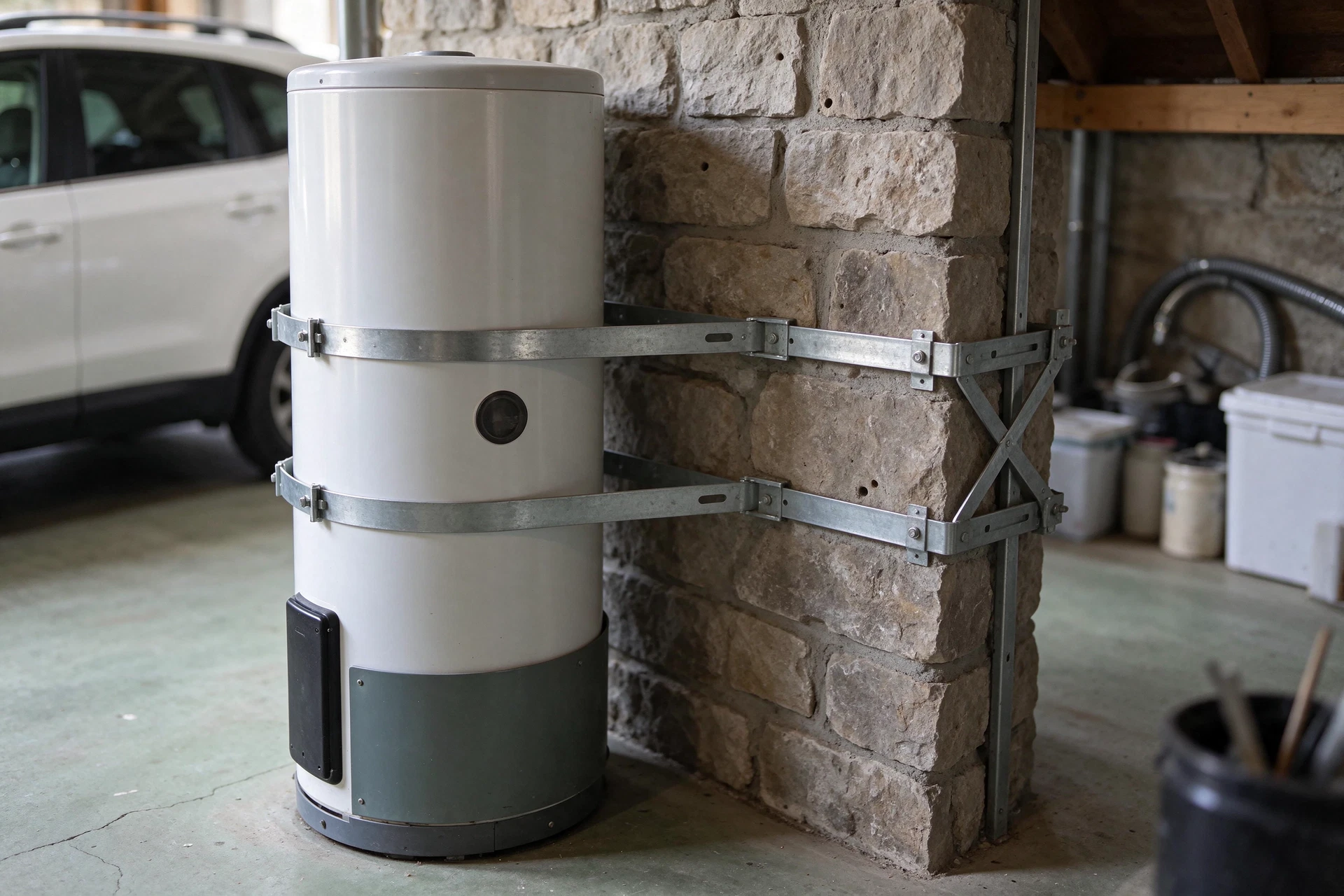
Local requirements matter more than a blanket statement about every Nevada property. City of Las Vegas residential water heater guidance calls for two seismic straps attached to framing: one within the upper one-third of the tank and one within the lower one-third. The lower strap must maintain at least four inches of clearance above the controls.
The Southern Nevada regional water heater strap detail likewise describes upper and lower restraints to resist horizontal displacement during earthquake motion. Its 2018 Uniform Plumbing Code reference is Section 507.2. Code editions and section numbers change, so the applicable installation or replacement date, local amendments, and governing building department must be considered before making a compliance determination.
These tank-strapping details concern tank-style water heaters. Tankless water heaters are typically mounted directly to the wall, but that does not automatically establish that their anchoring is adequate. Their mounting should follow the manufacturer’s instructions and applicable local requirements. A home inspection is not a code-compliance certification.
What an unsecured tank can damage
A tank-style water heater can weigh around 150 pounds empty, depending on its size and construction, and significantly more when filled with 40–50 gallons of water. Without proper strapping, the tank can tip or shift during seismic movement.
Movement can damage gas or water connections, release water into the home, and create fire or explosion hazards if a gas connection is compromised. An unsecured water heater can cause extensive property damage in a short amount of time. Proper restraints reduce the risk of displacement; they do not guarantee that the tank or connected utilities will survive every earthquake.
An often overlooked emergency benefit
In the event of a major disaster, fresh water may be scarce. If a water heater remains upright and intact, its stored water may be an emergency resource. A 40–50 gallon tank can contain that amount when full, although actual available water depends on the appliance’s capacity and condition.
Proper strapping helps protect the tank, but stored water should not automatically be assumed safe to drink after a disaster. Contamination and appliance damage can affect its suitability. Follow public-health and emergency-management guidance rather than attempting to drain or operate a damaged heater; hot water, electricity, and fuel connections present additional hazards.
Strapping systems and supporting structure
Strapping systems designed specifically for water heaters are generally preferable to improvised restraints. These kits typically include metal straps, hardware intended for structural attachment, and instructions for placement and spacing. Southern Nevada regional guidance recognizes products made for restraining water heaters and directs installation according to the manufacturer’s instructions.
The tank’s distance from the wall also matters. A large gap can allow movement even when straps appear to be present. Suitable blocking or another approved support arrangement may be necessary, but its design depends on the wall construction, tank position, and restraint system. Visible drywall alone is not evidence of a secure structural connection.
Do not treat a generic screw size, strap-wrapping pattern, or concrete anchor as a universal installation recipe. A qualified contractor should select the appropriate attachment and confirm that it does not damage concealed wiring or plumbing. Plastic or nylon ties should not be substituted for a proper water heater restraint system.
What inspectors look for
During a Las Vegas home inspection, inspectors review accessible water heater restraints and document visible concerns. Missing or improperly installed straps are commonly noted as safety deficiencies in inspection reports. A strap that is present but loose, poorly placed, or attached to unsuitable material may not provide the intended restraint.
The inspection can identify visible problems, but concealed fasteners, framing, and connections may limit what can be confirmed. Inspectors do not apply earthquake loads or dismantle walls to prove an anchoring system’s capacity. Where the installation cannot be adequately evaluated, further review by a licensed contractor may be recommended.
- Presence of upper and lower restraints in appropriate locations.
- Visible attachment to suitable framing or masonry.
- Clearance above controls and access to serviceable components.
- Visible looseness, damaged straps, or excessive gaps behind the tank.
When to call a professional
If you are unsure about strap placement, wall framing, concrete anchoring, or gas and plumbing clearances, hire a qualified professional. Improper installation can be just as unsafe as no strapping at all. Leave drilling, anchoring, and any movement of the appliance to someone equipped to evaluate the surrounding utilities and supporting structure.
For an inspection appointment, keep the water heater area accessible without disturbing the appliance. Existing replacement records, permits, and restraint-kit instructions can help a contractor assess the installation. If repairs are recommended, ask which system will be used and whether the work requires a permit or final inspection through the local building department.
A small safety detail worth checking
Water heater seismic straps are a simple but important safety feature. Proper installation helps protect the tank and its utility connections, while an inspection can bring overlooked restraint problems to your attention before a sale or after a replacement.
If you are unsure whether your water heater is properly secured, a professional inspection or licensed contractor can help identify concerns and determine appropriate next steps. For a home inspection with Absolute Home Inspections, call or text 702-752-0061 or email [email protected]. All inspections are overseen by a Certified Master Inspector.
This article is homeowner education, not a diagnosis of your property. Inspection findings, installation requirements, and repair recommendations depend on the home and the conditions at the time of inspection.
Call or text Absolute Home Inspections