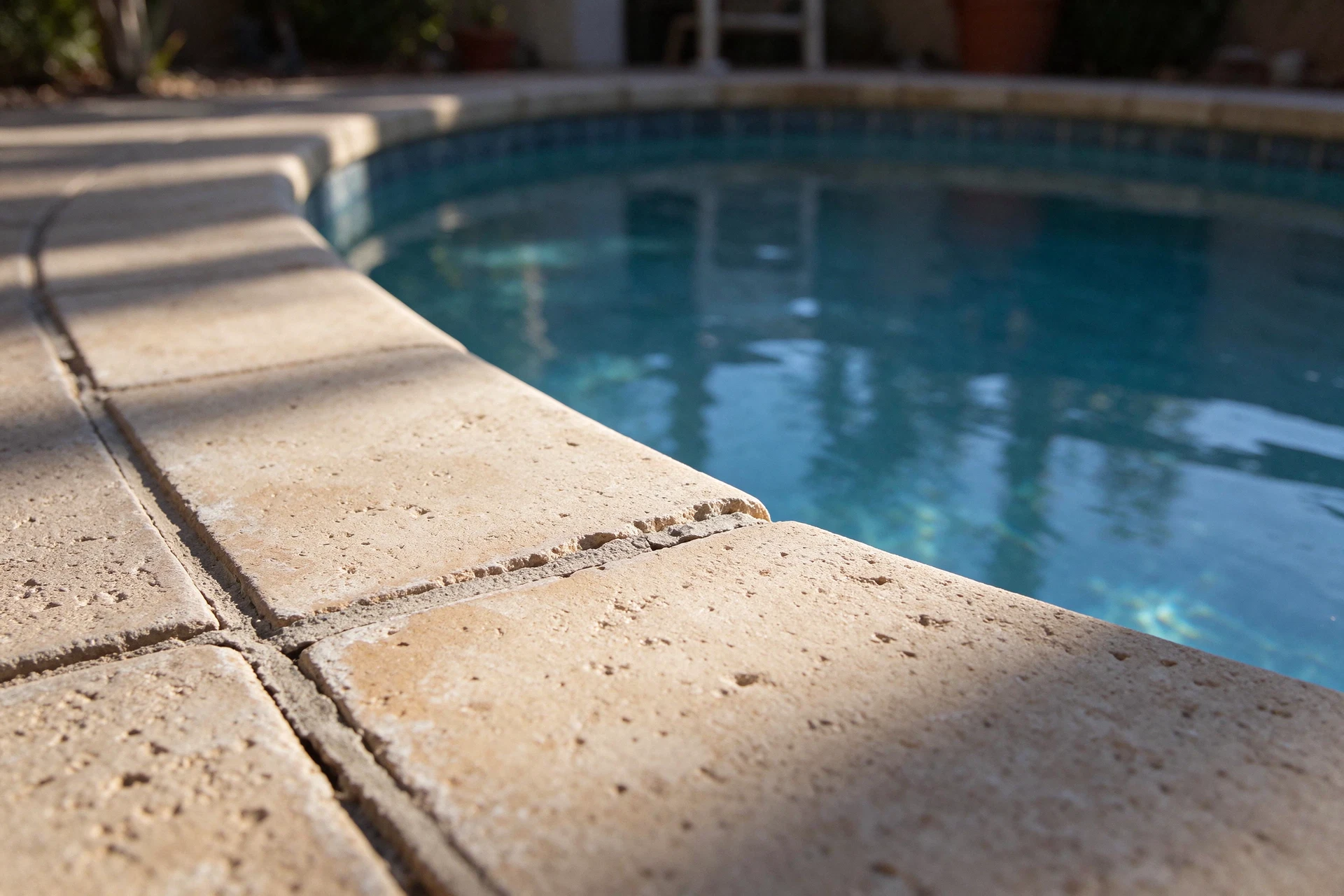
Pool Coping Concerns When Buying a Las Vegas Home
In Las Vegas, backyard pools are more than a luxury—they’re a way of life. During an inspection, one area that frequently raises questions and repair negotiations is pool coping. While it may seem cosmetic at first glance, damaged or improperly installed pool coping can point to safety concerns, water intrusion, and conditions that need further evaluation.
When a pool inspection is included in the agreed scope, accessible coping is evaluated for condition, stability, and signs of movement around the pool shell and surrounding deck. At Absolute Home Inspections, pool and spa inspections are paid add-ons, not an automatic part of every home inspection. Confirm that scope when scheduling a home with a pool.
What Is Pool Coping?
Pool coping is the cap or edge material installed around the perimeter of a swimming pool. It creates a finished edge between the pool and deck, helps protect the top of the pool shell, and can help manage water at that transition. Its walking surface should also be considered for traction; not every material or finish remains slip-resistant when wet.
Common coping materials seen in Las Vegas include poured concrete, precast concrete, travertine or other natural stone, and brick or masonry coping. Different materials weather differently, so the condition of joints and supporting material matters as much as the appearance of the finished edge.
Why Pool Coping Fails in Las Vegas
Southern Nevada’s climate plays a major role in coping deterioration. Extreme summer heat and repeated temperature changes cause materials to expand and contract. Over time, that movement can contribute to coping that cracks, separates, or lifts, particularly where movement joints are missing or no longer functioning.
Soil movement and settlement can also affect the pool surround. Soil conditions vary by property; inadequate compaction or movement beneath the deck can contribute to separation near the pool shell. A visible gap alone does not establish the underlying cause.
Poor drainage is another concern. Water that pools along the coping edge can deteriorate joints or affect supporting soil, especially during heavy storms. Improper installation, inadequate bonding, and rigid connections where movement should be accommodated can contribute to premature failure. A pool contractor can assess the appropriate details for the particular installation.
Common Pool Coping Issues Found During Inspections
During a Las Vegas pool inspection, inspectors frequently document visible defects around the pool edge. Some are primarily cosmetic, while others create immediate safety concerns or suggest a need to investigate drainage and movement.
- Cracked or broken coping stones.
- Loose coping or sections that sound hollow during an appropriate assessment.
- Gaps between coping and the pool shell.
- Coping lifting or settling unevenly.
- Deteriorated grout or mortar joints.
- Sharp or uneven edges creating tripping or cutting hazards.
Why Pool Coping Matters in a Home Inspection
Loose coping can be a tripping or cutting hazard. Gaps and failed joints may also provide a route for water to reach areas behind the coping or beneath the deck. Those conditions deserve attention, but a visual observation does not prove a pool leak or structural damage.
Pool coping concerns can affect future repair costs and buyer negotiations. Minor repairs can become more involved if the cause of movement or drainage problems remains unresolved. Inspection photographs and clear descriptions help buyers explain the concern to a contractor rather than relying on a general request to repair the pool.
A visual pool inspection cannot reveal every concealed defect or determine the condition of buried support without further investigation. Access restrictions, covers, debris, and operating conditions can limit what is evaluated. Those limitations should be recorded with the findings.
Typical Repair Options
While inspectors do not perform repairs, common corrective actions may include re-setting loose coping sections, replacing cracked or broken stones, repairing appropriate movement joints, and improving deck drainage away from the pool. Full coping replacement may be considered in advanced cases.
A licensed pool contractor should evaluate the scope and cost of repairs. Material, pool size, access, and the extent of damage all influence the work required. Before the inspection, make the pool perimeter accessible and gather any available repair records. Do not try to lift unstable coping or perform hazardous testing yourself.
Pool Coping Frequently Asked Questions
Is cracked pool coping a structural issue? Not always. Minor cracking can be cosmetic, but significant separation or movement should be evaluated further. The inspector documents visible conditions; a specialist may need to determine their cause.
Will a home inspection include pool coping? Confirm the inspection agreement. Accessible coping is evaluated when the pool inspection add-on is selected, subject to the agreed scope and site conditions.
Can pool coping issues cause leaks? Failed joints may allow water into unintended areas, but coping damage by itself does not establish that the pool is leaking. Suspected water loss may require separate leak detection.
Is pool coping replacement expensive? Costs vary based on material, pool size, and extent of damage. Obtain a property-specific estimate rather than assuming that a small visible crack means a small repair.
Should buyers request repairs for coping issues? That depends on severity and the transaction. Safety hazards, loose coping, or water intrusion concerns are useful subjects for a contractor evaluation and a discussion with your real estate representative.
Final Thoughts for Las Vegas Home Buyers
Pool coping issues are easy to overlook but can signal concerns worth understanding before buying a home in Las Vegas. An inspection helps identify visible cosmetic damage, safety hazards, and conditions that may warrant specialist evaluation.
If you’re purchasing a home with a pool, understanding the condition of the coping can help you make informed decisions about further evaluation and repair planning. Arrange the pool inspection early enough to obtain any recommended contractor assessment before your inspection deadline.
This article is homeowner education, not a diagnosis of your property. Inspection findings, installation requirements, and repair recommendations depend on the home and the conditions at the time of inspection.
Call or text Absolute Home Inspections