A Small Device With an Important Safety Job
When it comes to home safety, some of the most important protections are also the easiest to overlook. A missing oven anti-tip bracket is a safety concern found during Las Vegas home inspections. This small device plays a critical role in protecting children and reducing the risk of serious injuries.
A range may look secure between kitchen cabinets while still lacking an effective restraint. The concern is not whether the appliance cooks properly, but whether it can move forward when weight is applied to an open oven door.
What Is an Oven Anti-Tip Bracket?
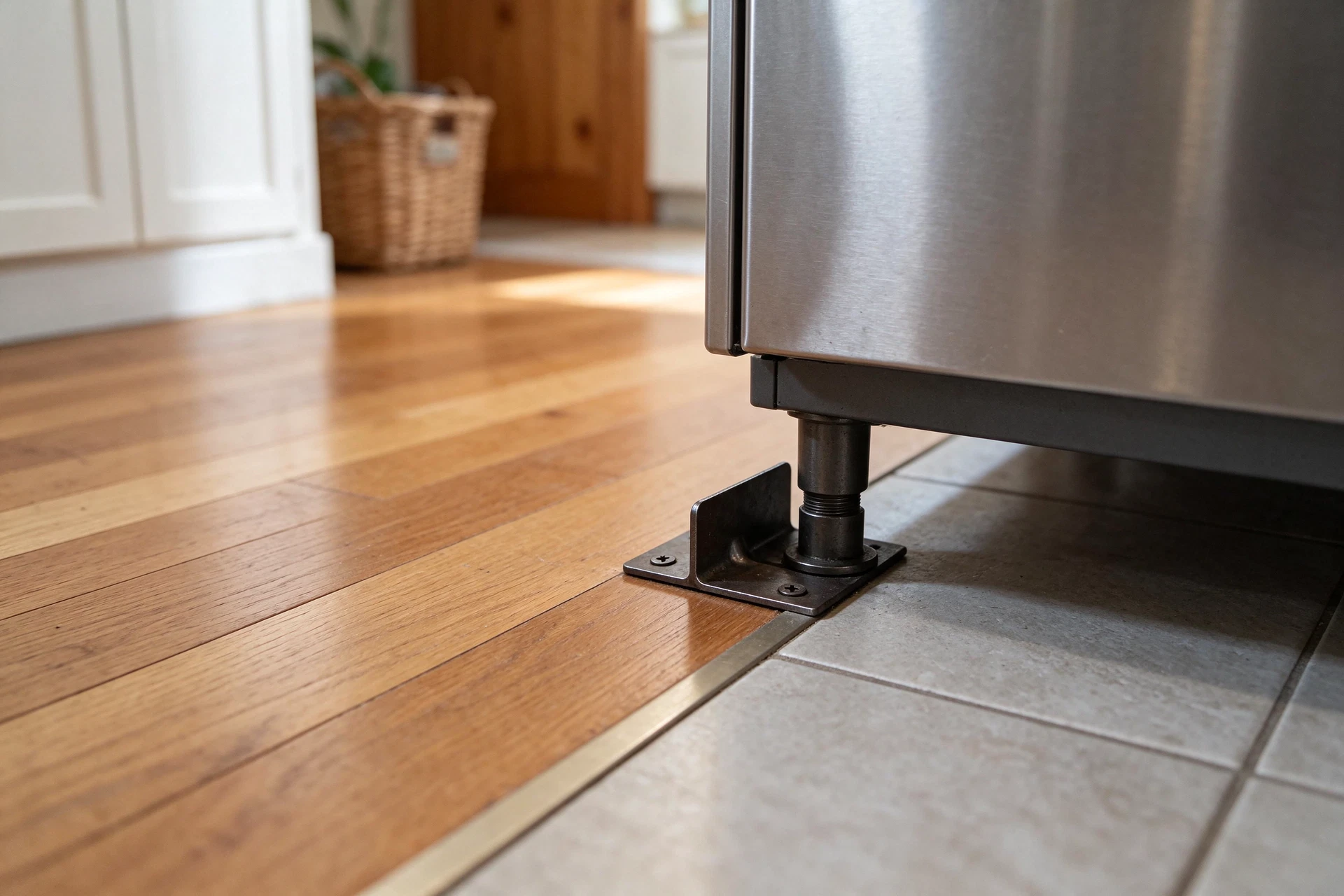
An oven anti-tip bracket is a metal device installed behind a freestanding range. A common design is secured to the floor or wall and captures one of the appliance's rear legs, helping prevent the stove from tipping forward. The correct design and mounting position depend on the manufacturer and model.
Without an effective restraint, a range can tip if a child climbs on the open oven door or heavy cookware is placed on it. Moving the appliance forward can also disengage a previously installed bracket. Simply finding a loose bracket behind the stove does not mean the appliance is secured.
Why Oven Anti-Tip Brackets Are So Important
Tipping can happen suddenly and with devastating force. A falling range can cause crushing injuries, while hot cookware or liquids can create a burn hazard. Children are particularly vulnerable when they use an open oven door as a step to reach the stovetop.
Anti-tip brackets are designed to reduce this hazard, but they do not make climbing on an appliance safe. Keep children away from an open oven door, and do not use the door as a seat, step, or shelf for heavy items. Adults should not lean on it for support either.
Are Oven Anti-Tip Brackets Required?
The U.S. Consumer Product Safety Commission describes anti-tip bracket requirements dating to 1991 in its discussion of voluntary range safety standards. Manufacturers' installation instructions call for the supplied restraint to be installed. Those product requirements should not be presented as a single, universal Las Vegas building-code rule covering every appliance and every installation date.
The appropriate device depends on the range model. Slide-in ranges may also require anti-tip brackets; built-in appliances can have different securing arrangements. Follow the model-specific instructions, and have any question about local requirements evaluated for the installation date and jurisdiction. A home inspection is not a code-compliance certification.
Are Anti-Tip Brackets Expensive?
Many ranges come with a bracket from the manufacturer, and replacement parts may be available through the manufacturer or an appliance supplier. The part itself is often a modest expense, but the complete correction includes selecting a compatible device, securing it properly, and confirming that the range engages it.
Ask an appliance professional for the current part and installation cost rather than relying on an old price estimate or assuming a universal bracket will fit. Floor construction, access, and connection conditions can affect the work involved.
Arrange Safe Installation or Rechecking
For a missing or questionable bracket, contact the builder, appliance installer, or a qualified appliance professional. Have the range's model number and installation instructions available if you can obtain them safely. The professional should use the specified restraint and suitable mounting method, then confirm that the appliance is properly engaged.
Do not pull a range forward or deliberately tip it to test stability yourself. A heavy appliance can fall, damage flooring, or strain gas and electrical connections. Drilling behind it can also encounter concealed utilities. If the range has been moved for cleaning, flooring work, or repairs, have its restraint engagement checked again before normal use.
How Anti-Tip Brackets Are Evaluated During a Home Inspection
During an applicable kitchen appliance evaluation, inspectors look for an anti-tip device and assess securing conditions when safely accessible. A visible bracket is useful evidence, but seeing it does not necessarily establish that it is correctly anchored or that the rear leg is engaged. Access and the appliance's configuration can limit what can be confirmed without moving it or disturbing connections.
If the bracket is missing, ineffective, or cannot be verified, the report should explain the finding or limitation and recommend appropriate follow-up. A missing restraint is noted as a safety concern, not dismissed because the oven otherwise operates. Keep the kitchen accessible and share any installation or repair documentation with the inspector; do not move the range in preparation for the visit.
Oven Anti-Tip Bracket FAQs for Las Vegas Homeowners
Do all ovens use the same bracket? No. Freestanding and slide-in ranges need the securing arrangement specified for that model, while built-in units may use different mechanisms. Appearance alone is not a reliable guide to the required hardware.
Is a missing anti-tip bracket a big deal? Yes. It is a serious safety issue, especially in homes with children. Ask for proper correction and confirmation rather than accepting a spare bracket left in a drawer as proof of installation.
Will a home inspection fail because of it? Home inspections do not pass or fail. They document conditions so buyers and owners can make informed decisions and arrange repairs. An inaccessible restraint may require further evaluation rather than a definite statement that it is present or absent.
Oven anti-tip brackets are small, yet they provide important protection when correctly installed and engaged. If you have questions about this finding in an Absolute Home Inspections report, call or text 702-752-0061 or email [email protected] for help understanding the recommendation.
This article is homeowner education, not a diagnosis of your property. Inspection findings, installation requirements, and repair recommendations depend on the home and the conditions at the time of inspection.
Call or text Absolute Home Inspections