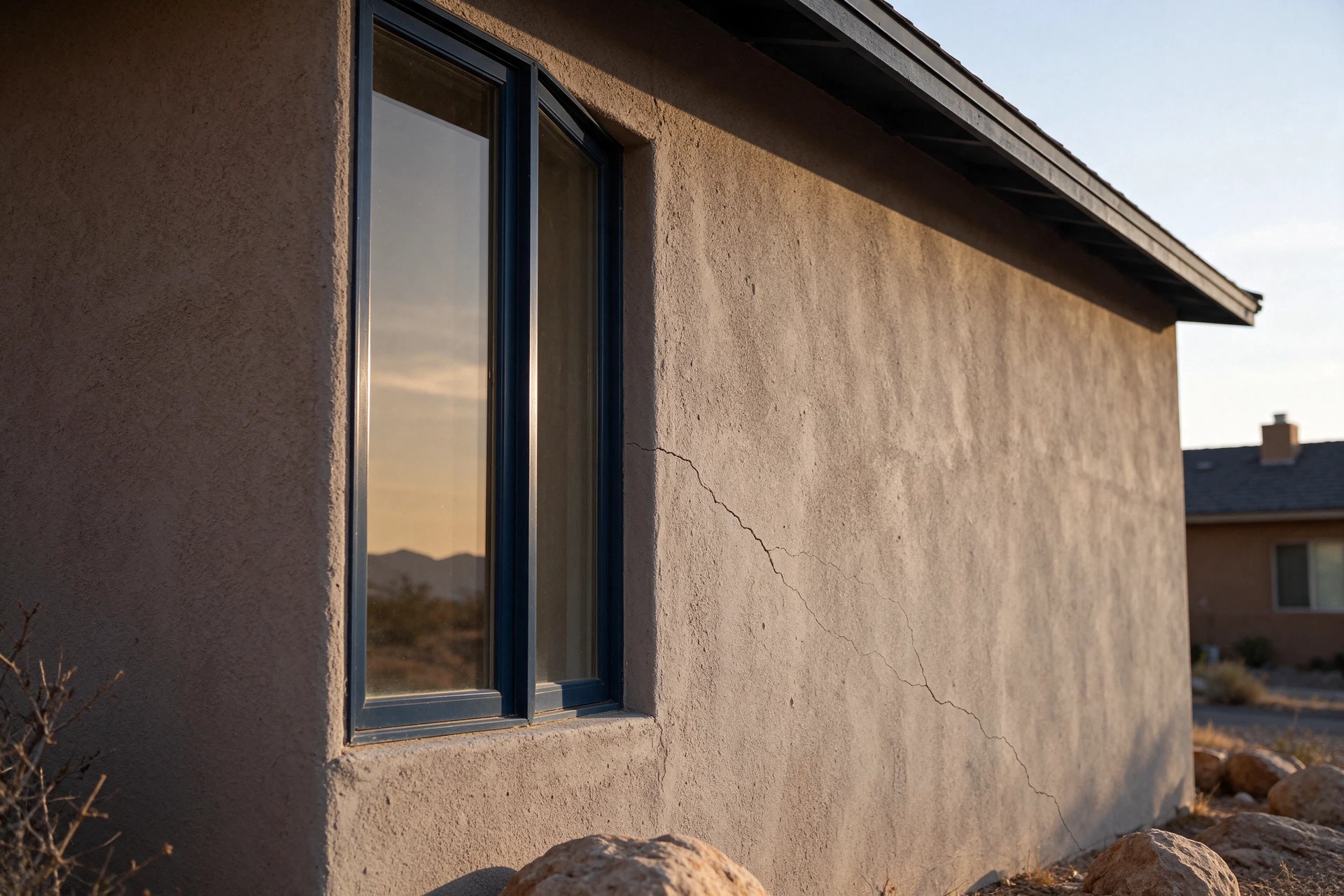
Stucco cracks are common, but the details matter
If you own a home in Las Vegas, chances are the exterior is finished with stucco. Stucco cracking is one of the most common topics that comes up during home inspections. The good news? Not all stucco cracks are a big deal — but understanding which ones matter is key.
What Is Stucco?
Traditional stucco is an exterior wall finish made from a mixture of cement, sand, lime, and water. It is applied wet over exterior wall materials and then hardens into a durable, protective shell. Stucco can be sprayed or troweled on, finished with various textures, and applied in multiple layers.
Because of its durability and heat resistance, stucco is extremely popular in Las Vegas construction.
How Long Does Stucco Last?
When properly maintained, stucco can last for decades. The original guide cited a 50–80-year lifespan; treat that as a broad estimate, not a prediction for a particular home. Installation quality, exposure, repairs, and the condition of the underlying wall all affect service life.
In Las Vegas, regular maintenance is essential due to extreme summer heat, intense sun exposure, and seasonal temperature swings. Address small cracks as they appear and keep moisture from entering behind the stucco surface. The original guide suggested repainting approximately every five years, but the appropriate interval depends on the coating, its manufacturer’s recommendations, and the actual surface condition.
Why Does Stucco Crack?
Stucco cracking is typical and can occur for many reasons. These include natural settling of the home, seasonal expansion and shrinkage, poor workmanship or improper mixing, seismic movement, shrinkage during curing, and structural movement over time.
Because stucco is a rigid material applied over framing, some cracking is expected, especially in older Las Vegas homes. That does not establish the cause of any individual crack.
Are Stucco Cracks a Big Deal?
In most cases, small stucco cracks are normal and not an immediate concern. Even minor openings deserve attention because they can allow moisture intrusion. Moisture behind stucco can lead to bigger problems over time, and routine maintenance helps keep cosmetic issues from becoming more costly repairs.
How Are Stucco Cracks Repaired?
When caught early, minor surface cracks may be relatively straightforward to repair. Stucco patch compounds, elastomeric fillers, and exterior paint products designed for stucco are available, but the repair material should be compatible with the existing finish and wall system.
Proper patching and sealing help reduce moisture entry; simply covering a crack does not correct ongoing movement or concealed damage. Ask a qualified stucco contractor about recurring cracks, loose areas, staining, or uncertain wall construction. Do not climb onto a roof or work at height to investigate an exterior defect.
How Big Is Too Big?
The original article used roughly 1/16 inch as an example of a small crack and around 1/8 inch as a point to consult a qualified professional. These are rough screening guidelines, not universal pass-or-fail limits. Crack width alone cannot establish that a wall is sound or that a problem is structural.
Larger cracks may indicate structural movement, improper installation, or moisture-related issues. Seek professional evaluation for cracks that are spreading rapidly or accompanied by staining, soft areas, separation, or visible displacement, even if the opening is narrow. Avoid probing or removing material to look behind the finish yourself.
How Stucco Cracks Are Evaluated During a Home Inspection
During an Absolute Home Inspection in Las Vegas, inspectors observe accessible, visible stucco surfaces and note the size, pattern, and location of cracks. They distinguish between apparent cosmetic concerns and conditions that may be more significant, then recommend repairs or further evaluation when appropriate.
A home inspection is a visual assessment, not a destructive investigation of the wall assembly or a structural engineering analysis. Concealed moisture damage may not be visible. Inspection findings help you decide which repairs or specialist evaluations to pursue; they do not guarantee that every defect has been found.
Stucco Cracking FAQs (Las Vegas)
Is stucco cracking normal in Las Vegas homes? Some cracking is widespread because of climate, soil conditions, and home age. Its presence alone does not tell you how serious it is.
Can stucco cracks lead to water damage? Yes. Open cracks can allow moisture to enter behind the stucco and contribute to hidden damage over time.
Do small cracks need attention? Yes. Review them for appropriate maintenance instead of ignoring them. A suitable repair depends on the surface and the underlying cause.
When should I call a professional? Consult a qualified professional for wider cracks, rapid changes, staining, or soft areas. The original 1/8-inch guideline should not delay evaluation when other warning signs are present.
Will a home inspection note stucco cracking? Accessible, visible cracking is documented with recommendations based on the observed condition. If you have questions about stucco conditions or inspection findings, a professional home inspector can help clarify next steps.
This article is homeowner education, not a diagnosis of your property. Inspection findings, installation requirements, and repair recommendations depend on the home and the conditions at the time of inspection.
Call or text Absolute Home Inspections