What Does “Miswired Receptacle” Mean?
Electrical receptacles may look simple, but when they’re wired incorrectly, they can create serious safety hazards. During Las Vegas home inspections, miswired outlets are a common finding, especially in older homes or properties with DIY electrical work. Understanding the most common types of receptacle wiring issues helps homeowners and buyers recognize risks and take appropriate action.
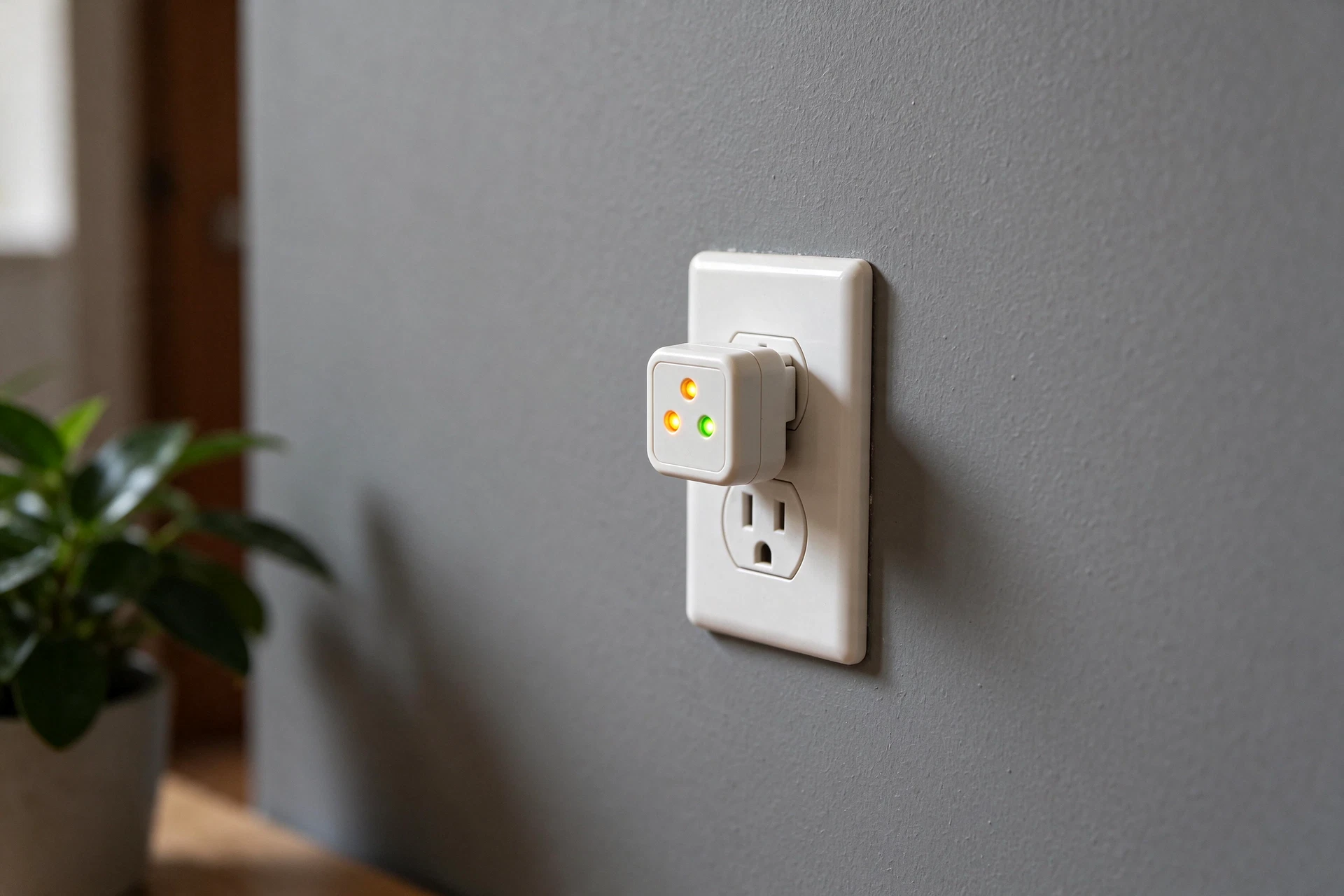
A miswired receptacle is an outlet with electrical connections that are not installed correctly. While power may still be present, improper wiring can create shock hazards, contribute to fire risks, or interfere with the safe operation of connected equipment. An outlet that powers a lamp is not necessarily wired safely. Home inspectors use electrical testers to identify concerns that are not visible from the outside.
Missing Ground
A missing ground occurs when the grounding conductor is absent or not correctly connected. Grounding provides a path for fault current that helps protective devices operate. Without an effective grounding path, a fault can leave exposed metal parts of appliances energized and increase the risk of electric shock.
Missing grounds can be found in older Las Vegas homes wired before modern grounding requirements. An older two-wire installation is not automatically evidence of an improper recent repair, but replacing an outlet with a three-slot receptacle does not establish a ground. A qualified electrician should evaluate the actual wiring and appropriate protection.
Hot and Neutral Reversed: Reversed Polarity
This condition occurs when the hot, or live, wire and the neutral wire are connected to the wrong terminals on the receptacle. “Reversed polarity” commonly describes the same hot-and-neutral reversal; it is not a separate defect in this context.
An appliance may appear off while parts intended to be on the neutral side remain energized. This can defeat safety features in some devices and create unexpected shock hazards during use or maintenance. Even though the outlet may function, the wiring requires evaluation and correction.
Hot and Ground Reversed
A hot-to-ground reversal means the energized conductor is connected to the grounding path. Metal components connected to that path may carry live voltage, creating a serious shock hazard. This condition requires prompt evaluation and correction by a qualified electrician.
A tester indication is a reason for further investigation, not a complete diagnosis of concealed wiring. Do not open the receptacle or attempt to rearrange wires yourself. Avoid using an outlet identified as unsafe until a qualified electrician has evaluated it.
Why Miswired Outlets Occur
Miswired receptacles often result from DIY electrical repairs, improper outlet replacement, older wiring methods, or unqualified electrical work. Because outlets can still appear to work, problems may go unnoticed until testing is performed. A recently replaced faceplate or receptacle does not establish that the wiring behind it is correct.
How Receptacles Are Checked During an Inspection
During an Absolute Home Inspections visit, inspectors test accessible receptacles within the inspection scope, identify grounding and polarity concerns, document affected locations, and recommend correction by a qualified electrician. Inspectors do not perform electrical repairs but help buyers understand the safety concerns.
Testing has limits. Furniture, stored belongings, or other access restrictions can prevent checks, and simple plug-in testers cannot identify every wiring defect or establish the condition of an entire circuit. Keep accessible outlets clear before the inspection. The report should explain observed findings and relevant limitations; it is not a code-compliance certification.
Repairing Wiring Problems Safely
Miswired outlets should not be ignored. Depending on the defect, they can create shock hazards, contribute to fire risk, or affect connected equipment. Many can be corrected, but the work may range from correcting connections to providing appropriate grounding or upgrading wiring where necessary.
A licensed electrician should complete repairs and determine the applicable requirements. Those requirements depend on the installation date, subsequent alterations, and local jurisdiction. An inspection finding does not by itself establish that an older installation violates today’s rules, and correcting one outlet does not certify every circuit in the home.
Miswired Receptacle FAQs for Las Vegas Buyers
Will a home inspection test electrical outlets? Yes, receptacles are commonly tested, subject to accessibility and the agreed inspection scope. A normal reading does not rule out every electrical problem.
Are miswired outlets a deal breaker? Not usually, but safety concerns should be evaluated before you decide how to proceed. The electrician’s findings help clarify the extent of the work.
Are these issues expensive to fix? Some localized wiring issues are straightforward to correct. Cost depends on accessibility, wiring type, and whether the problem extends beyond the receptacle. Obtain an actual repair quote rather than assuming every outlet needs the same work.
Can GFCIs fix grounding problems? No. Ground-fault circuit interrupters provide shock protection but do not create a ground. An electrician can determine whether a properly labeled GFCI-protected replacement is an appropriate permitted option for an existing ungrounded circuit.
Should miswired outlets be repaired before closing? Addressing the findings before closing can improve safety and reduce surprises after move-in. Arrange evaluation and discuss repair timing with the parties involved. A professional inspection helps identify concerns early so buyers and homeowners can take appropriate steps to protect their homes and families.
This article is homeowner education, not a diagnosis of your property. Inspection findings, installation requirements, and repair recommendations depend on the home and the conditions at the time of inspection.
Call or text Absolute Home Inspections