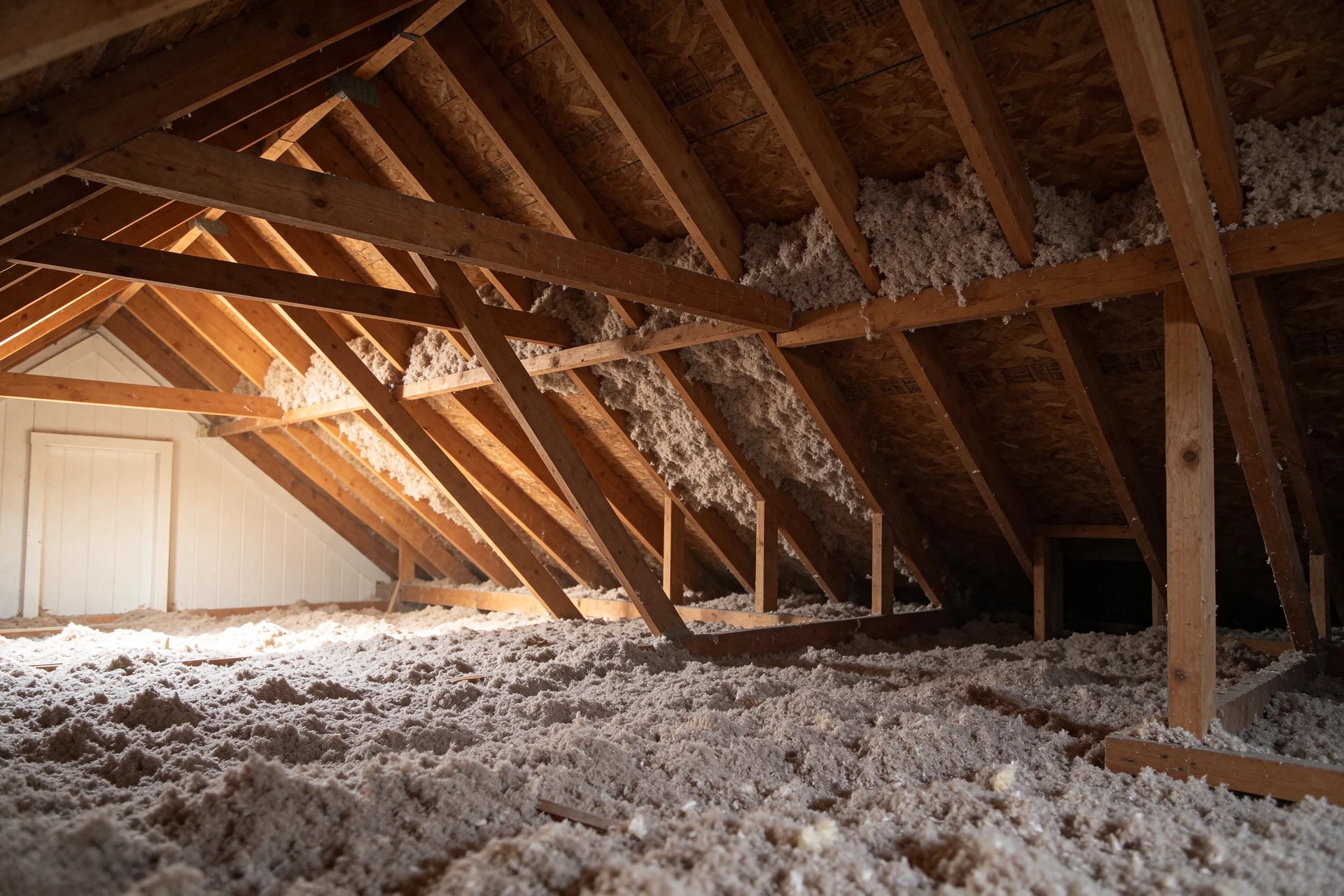
Why Attic Insulation Is Especially Important in Las Vegas
In Las Vegas homes, attic insulation plays a major role in comfort, energy efficiency, and long-term home performance. During an Absolute Home Inspection, accessible attic insulation is evaluated because inadequate or improperly installed insulation can contribute to high energy bills and uneven temperatures. Visible staining or damp insulation also deserves attention, although an insulation check alone cannot establish the cause of a moisture problem.
Las Vegas experiences extreme summer heat, long cooling seasons, and very high attic temperatures. Without adequate insulation between an unconditioned attic and the rooms below, heat moves into the living space, making the air conditioning work harder. Insulation deficiencies can contribute to hot rooms, uneven cooling, and higher power bills, but ducts, air leaks, equipment condition, and sun exposure can produce similar symptoms.
At Absolute Home Inspections, attic insulation concerns are among the findings we document during inspections throughout Las Vegas, Henderson, Summerlin, and Clark County. The useful question is not simply whether insulation is present, but whether its visible depth and coverage appear appropriate for the attic’s construction.
Recommended Attic Insulation Levels for Las Vegas Homes
R-value measures insulation’s resistance to heat flow. The original guide discussed R-38 and R-49 as common planning figures. Those numbers need context: they are not a universal minimum and optimum for every Las Vegas attic, and an older installation is not automatically a code violation because newer recommendations are higher.
The Las Vegas Valley is generally climate zone 3B, not climate zone 2. Clark County’s local energy-code amendments also recognize a different climate zone for areas above 4,000 feet. Location, the applicable jurisdiction, installation date, and the home’s approved construction or alteration plans all matter when assessing requirements.
ENERGY STAR’s retrofit guidance for existing wood-framed buildings lists R-49 for adding insulation to an uninsulated attic in zone 3. Its separate column for an attic already containing 3–4 inches lists adding R-38; that is an additional-insulation recommendation, not a statement that the finished attic should total R-38. A qualified insulation contractor should confirm the existing material and appropriate final assembly before recommending an upgrade.
Some older homes have relatively low insulation levels, including installations around R-19 or less. Such levels may offer an opportunity to improve comfort and efficiency. The right recommendation depends on the actual condition and assembly rather than assuming all older insulation must be replaced.
How Insulation Levels Are Measured During a Home Inspection
During a home inspection in Las Vegas, attic insulation is visually evaluated and its approximate depth measured where safely accessible. Inspectors look at the insulation type, uniformity of coverage, and signs of disturbance or compression. An accessible depth marker or installation label may provide useful additional information.
Insulation that is compressed, uneven, or missing may not perform at its rated R-value. Depth alone does not establish an exact R-value: fiberglass and cellulose have different properties, and installation density and condition affect performance. A visual inspection documents what can be observed without extensively moving insulation or opening concealed assemblies.
- Identify visible insulation materials, such as blown-in fiberglass, cellulose, or batts.
- Check accessible depth and whether coverage is reasonably consistent.
- Document gaps, compression, disturbance, and visible moisture-related concerns.
- Identify access restrictions and recommend further evaluation when needed.
Common Attic Insulation Issues Found During Las Vegas Home Inspections
We frequently identify low visible insulation levels, missing areas, compressed material, and insulation disturbed by previous repairs. A small uncovered area above a room can matter even when the rest of the attic looks well insulated. These conditions should be evaluated in relation to the attic’s intended design.
Insulation blocking ventilation pathways is another concern in vented attics. More insulation is not always better if it interferes with necessary airflow or required clearances around equipment. A contractor should assess the ventilation arrangement and any electrical, heat-producing, or moisture issues before installing more material.
Homeowners should not enter an unfamiliar attic or move insulation around wiring, fixtures, or suspected older hazardous materials. Attic heat, concealed framing, and limited footing create risks. Let the inspector explain the observed condition and identify the appropriate specialist.
Insulation Type Matters Too
Blown-in fiberglass and cellulose are common attic materials, while batt insulation is also found in many homes. Older properties may contain other materials requiring identification before anyone disturbs them. Properly installed blown-in material can provide consistent coverage around framing and irregular spaces, but it still needs the correct depth and distribution.
Batts can leave gaps when poorly fitted or installed unevenly. Compression can also reduce performance. Blown-in material can settle or become displaced over time, so the current visible condition matters more than assuming the original installation has remained unchanged. Neither material type guarantees a good result without proper installation.
Attic Access and Insulation Loss
One frequently overlooked area is the attic access opening. Uninsulated hatches, poorly sealed doors, and insulation pulled back for access and never replaced can allow heat transfer and air leakage between the attic and living space. The access assembly deserves attention alongside the surrounding insulation.
Before an inspection, clear stored belongings beneath or in front of the attic opening and tell the inspector about any known access problems. Do not climb into the attic to prepare it. If you have invoices, installation labels, or information about previous roof or HVAC repairs, make those available so observed disturbance can be understood in context.
How Attic Insulation Affects Home Buyers
For buyers, attic insulation condition can influence monthly energy costs, indoor comfort, and the workload placed on cooling equipment. Significant visible deficiencies may be documented during a buyer’s inspection and considered when discussing repairs. Insulation upgrades are often improvement or maintenance decisions, rather than proof that a home is unsuitable.
Costs vary with attic size, access, existing material, air-sealing needs, and any work needed before insulation is added. Obtain a property-specific contractor estimate rather than relying on a general savings or price promise. Ask whether the proposed scope includes restoring disturbed coverage and treating the hatch.
Selling a home does not, by itself, establish a universal obligation to upgrade its insulation. Requirements can change with permitted alterations and local rules. The inspection report can identify visible concerns, but it is not a code-compliance certification or a determination of the parties’ contractual obligations.
What a Home Inspection Can — and Cannot — Do
Attic insulation is visually inspected, measured where accessible, and documented in the inspection report. Inspectors do not calculate exact installed R-values, extensively move insulation, or perform an energy audit as part of this visual evaluation. Restricted access, framing, stored items, and insulation itself may conceal conditions.
A professional inspection can identify visible deficiencies and recommend further evaluation when levels appear insufficient. It cannot predict a specific reduction in utility bills or guarantee that every defect has been found. A qualified insulation contractor or energy professional can investigate the assembly more closely and develop an improvement plan.
Attic insulation is just one of many factors that affect home performance. At Absolute Home Inspections, every inspection is overseen by a Certified Master Inspector®, with a focus on clear explanations and practical recommendations. If you are buying, selling, or maintaining a home, call or text 702-752-0061 or email [email protected] to discuss an inspection and the attic concerns you want reviewed.
This article is homeowner education, not a diagnosis of your property. Inspection findings, installation requirements, and repair recommendations depend on the home and the conditions at the time of inspection.
Call or text Absolute Home Inspections